
Ensuring a Smooth Loan Process: Property Requirements for FHA, VA, and USDA Loans
Government-backed loans check the house as carefully as they check you: FHA, VA, and USDA appraisals all require working smoke detectors, safe electrical, intact windows and doors, handrails on open stairwells, no chipped pre-1978 paint, a roof with at least two years of life, and proper well and septic separation. VA and USDA add their own items: water tests for private wells, and termite inspections on nearly all VA deals. Knowing the list before you offer prevents the re-inspections that derail closings.
Common property requirements for FHA, VA, and USDA loans
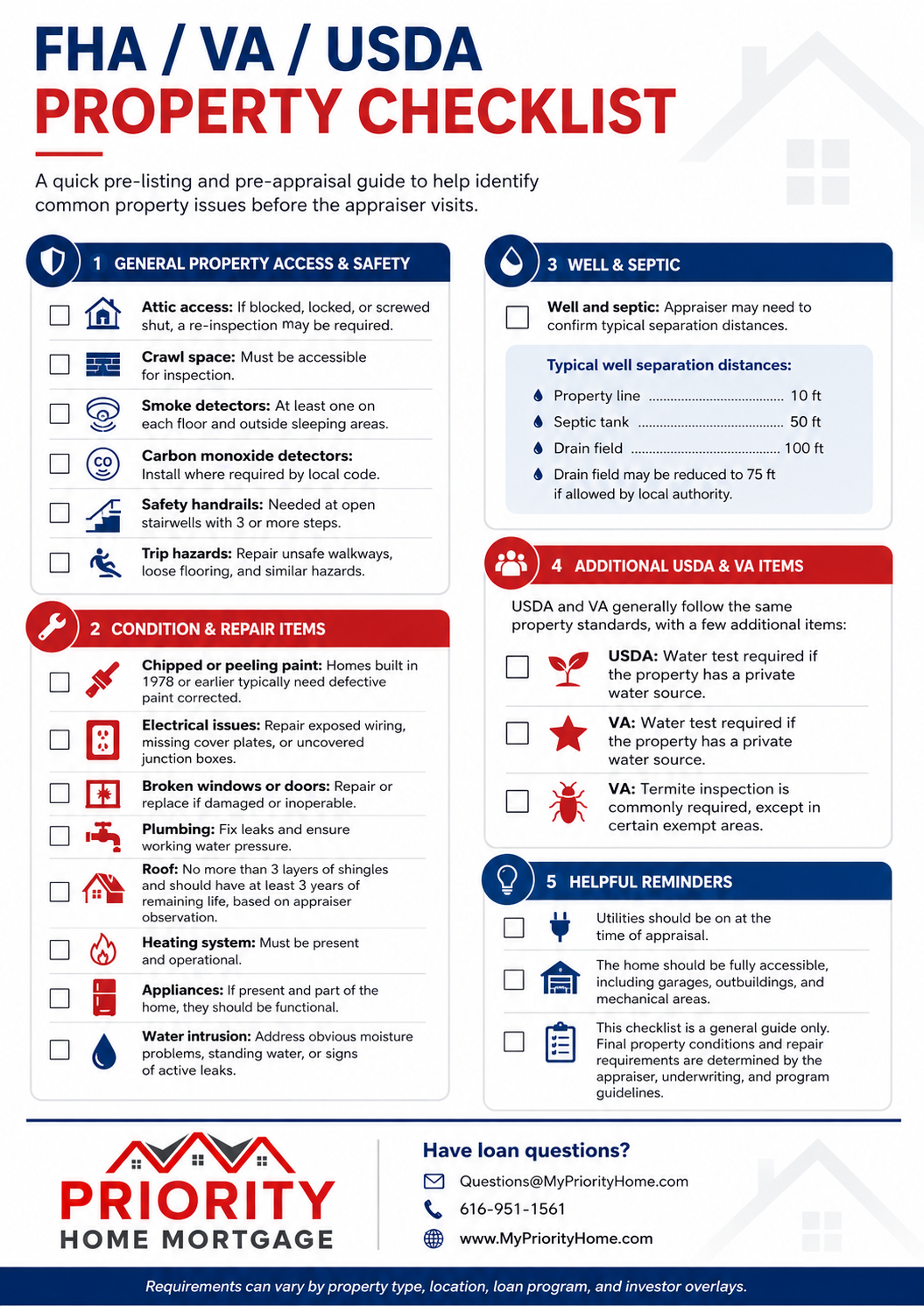
FHA, VA, and USDA each have specific property standards that must be met for loan approval. Download our one-page checklist, or walk the categories below:
- Accessibility:
- Attic access: A functioning access point to the attic is required for inspection purposes. Blocked, locked, or screwed-shut access will necessitate a re-inspection.
- Crawl space access: The homeowner is responsible for ensuring the crawl space is accessible for a thorough inspection.
- Safety:
- Smoke detectors: Each floor and the area outside each sleeping area must have a functioning smoke detector.
- GFI outlets (Ground Fault Circuit Interrupter): While not always an FHA requirement, most local building codes mandate GFI outlets in bathrooms and near open sinks in kitchens to prevent shock hazards.
- Electrical safety: Exposed wiring or uncovered junction boxes pose safety risks and will need to be addressed.
- Broken windows and doors: Broken or damaged windows and doors compromise security and weatherproofing. Repairs are necessary before loan approval.
- Handrails: Open stairwells with three or more steps require sturdy handrails.
- General condition:
- Lead paint: For properties built before 1978, chipped or peeling paint might contain lead. Repairs may involve scraping and repainting with lead-safe materials.
- Appliances: A functioning stove and refrigerator are typically required for loan approval.
- Plumbing: Leaking faucets or weak water pressure indicate potential problems that need attention.
- Trip hazards: Uneven walkways, driveways, or poorly installed carpeting should be addressed.
- Roof: Generally, no more than three layers of shingles are allowed, and the remaining roof life should be at least two years, as determined by the appraiser’s visual inspection.
- Well & septic systems (for properties with private water and sewage). The appraiser verifies these isolation distances from the well:
- Property line: minimum 10 feet
- Septic tank: minimum 50 feet
- Drain field: minimum 100 feet (reduced to 75 feet if permitted by local authorities)
Additional requirements for USDA loans
- Water test: Mandatory if the property has a private water source (well).
Additional requirements for VA loans
- Water test: Like USDA, VA requires a water test for properties with private water sources.
- Termite inspection: Mandatory for all VA-financed properties except a few designated counties in Northern Michigan. Buyers are typically responsible for the cost.
Remember: These are general guidelines. Specific requirements vary with your loan program, local building codes, and lender policies.
Tips for navigating property requirements
- Consult a mortgage professional early: An experienced lender can explain the requirements for your chosen program and spot likely issues from the listing photos alone.
- Use qualified home inspectors: Ensure your inspector knows FHA, VA, or USDA standards for the loan type you are pursuing. Our guide to common home inspection issues covers what they look for.
- Ask questions: Never hesitate to ask your lender or realtor about property eligibility: it is cheaper to ask in week one than to re-inspect in week five.